Banking, FD & Savings
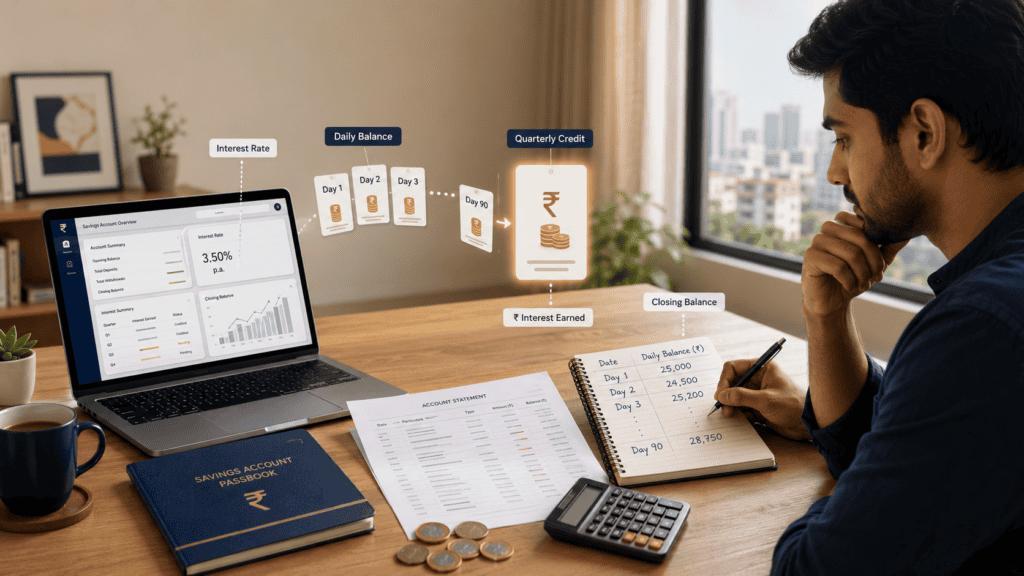
The Banking, FD & Savings category helps Indian readers understand safe cash management, bank accounts, fixed deposits, recurring deposits, emergency funds, and savings-related tax rules. This section covers fixed deposit meaning, FD calculator, RD calculator, FD vs RD, simple vs compound interest, savings account interest, sweep-in FD, premature FD withdrawal, senior citizen FD, TDS on FD interest, Form 15G, Form 15H, emergency fund planning, zero balance account vs savings account, minimum balance charges, joint account rules, small finance bank FDs, and post office FD vs bank FD.
The goal is to help readers make smarter decisions about money that should be kept safe, liquid, and easily accessible. Not every rupee should go into high-risk investments; families also need bank savings, short-term deposits, and emergency funds. This category explains how interest is calculated, when FD or RD may be useful, what penalties and TDS may apply, and how safety differs across banks and deposit products. Readers should always check current interest rates, bank charges, DICGC cover, and product terms from official bank or regulator sources before investing or opening accounts.